History

Wrecks, ruins and the places the sea has not quite finished with.

9 on the map. See them all at once.

Aarhus (1894)

Moreton Island

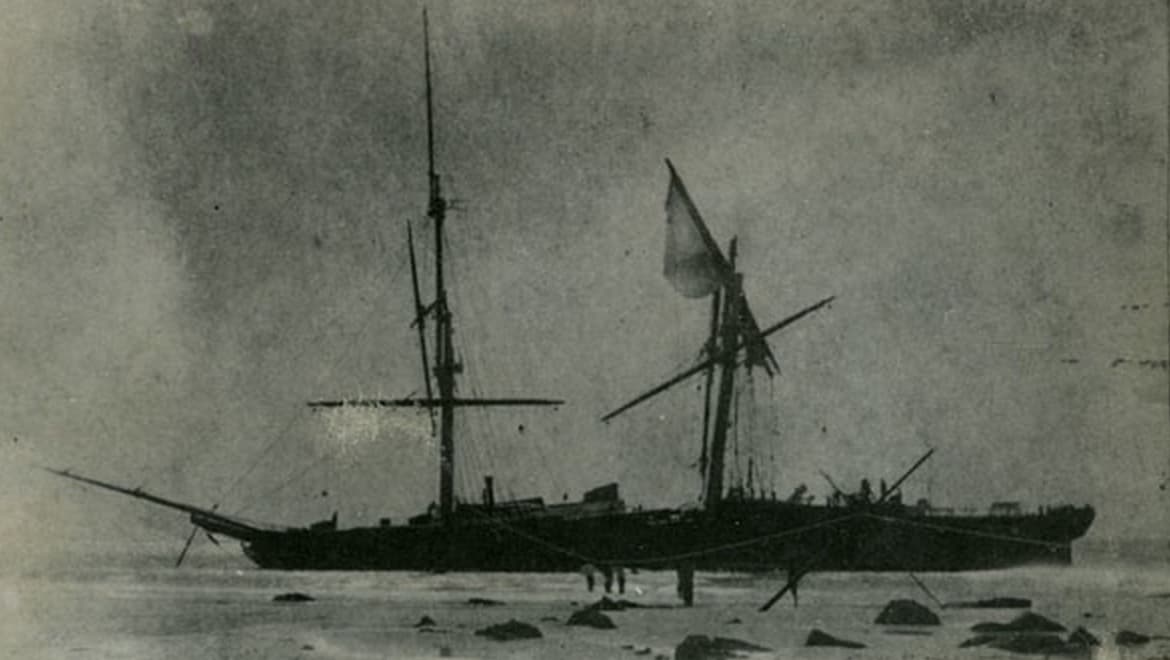
Aarhus (1894)

A Danish iron barque, 122 days out of New York with 15,760 cases of kerosene, struck Smith Rock off Cape Moreton on a February night in 1894 and sank in ten minutes. All fifteen aboard reached shore. The Marine Board blamed her captain, then turned on the pilot service that had left him waiting an hour for a pilot who never came.

Cambus Wallace (1894)

South Stradbroke Island

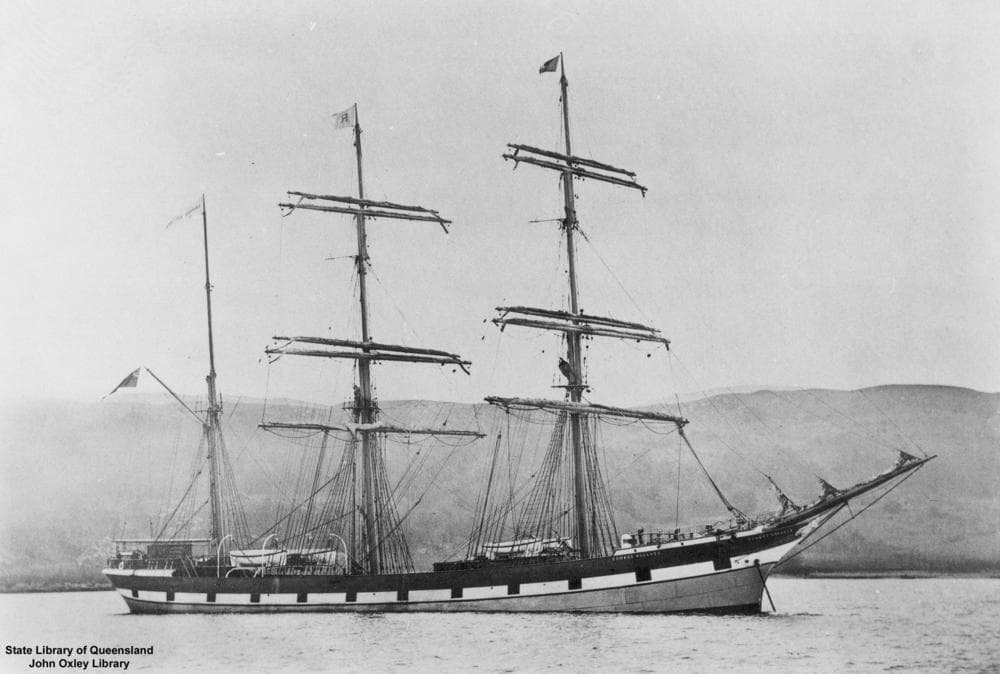
Cambus Wallace (1894)

A brand-new Scottish steel barque, four months out from the Clyde River on her first voyage, was hove-to in rain and a rising south-easterly on the night of 2 September 1894, her captain sure he was thirty miles off the coast. Before dawn she struck 200 yards off the ocean beach of Stradbroke Island, at the narrow sand neck then called Jumpinpin, and was in pieces within a day. Six of her twenty-seven crew died. Her cargo of salt, whisky, beer, pig iron and 1,200 cases of dynamite littered the beach for miles; the dynamite was blown up in the dunes. Four years later the sea broke through the neck beside the sailors' graves and made the Jumpinpin channel, splitting Stradbroke into the two islands we know today.
Peruvian (1846)

Bellona Reefs

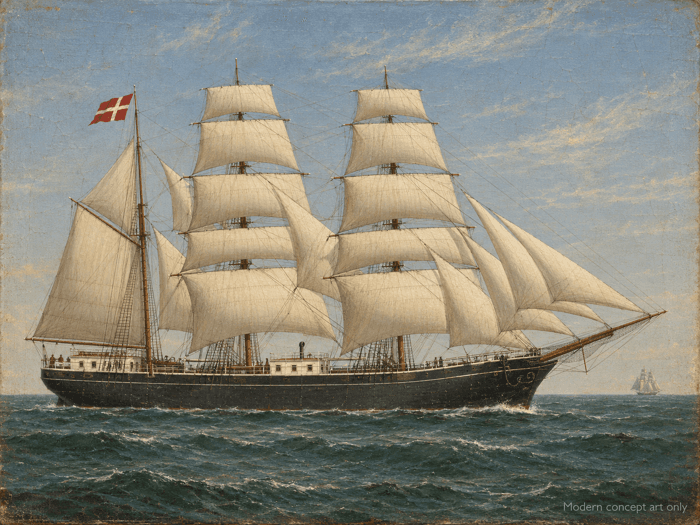
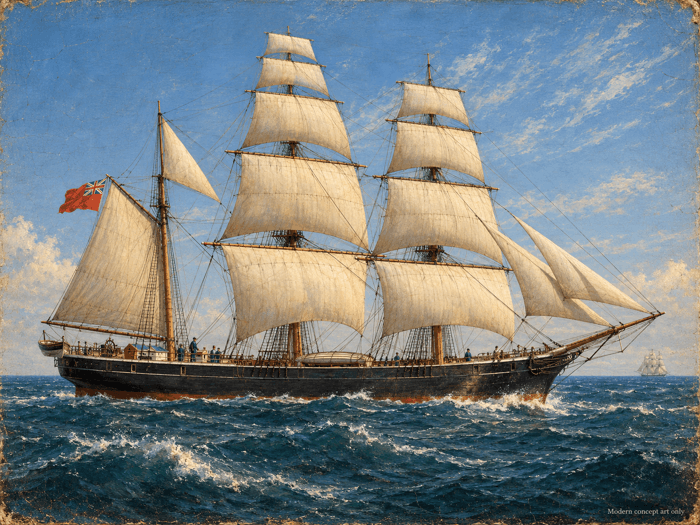
Peruvian (1846)

A Dundee barque, owned and sailed by her captain, struck a reef of the Bellona group in the Coral Sea before dawn on 8 March 1846. Twenty-one people drifted for forty-two days on a raft of her masts; seven reached Cape Cleveland, near today's Townsville. Aboriginal people found the last four starving on the shore, nursed them and took them in. About two years later illness killed the apprentice and then the captain, and his wife died four days after him. The able seaman James Morrill lived seventeen years among his adoptive kin before walking up to a Burdekin sheep station in 1863. The wreck was found and burned by a whaler. A misprinted latitude later moved it 800km south.

Platypus (1926)

Peel Island

Platypus (1926)

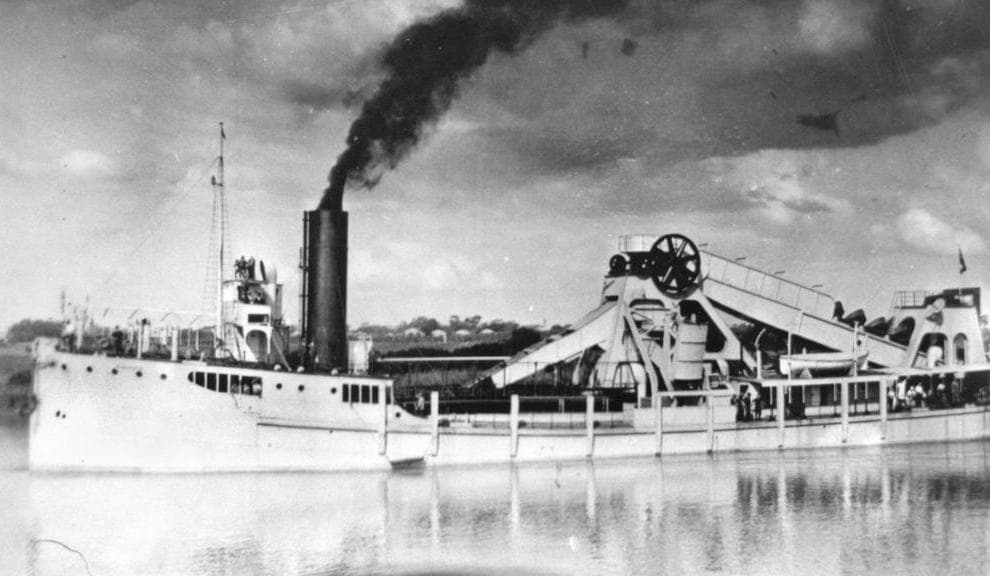
A Clyde-built bucket dredger that spent forty-two years cutting channels from Brisbane to the Gulf, opening much of Queensland's northern port trade. She was decommissioned in December 1923 and deliberately sunk off Peel Island in October 1926 to shelter the lazaret jetty.

Princeza (1863)

North Stradbroke Island

Princeza (1863)

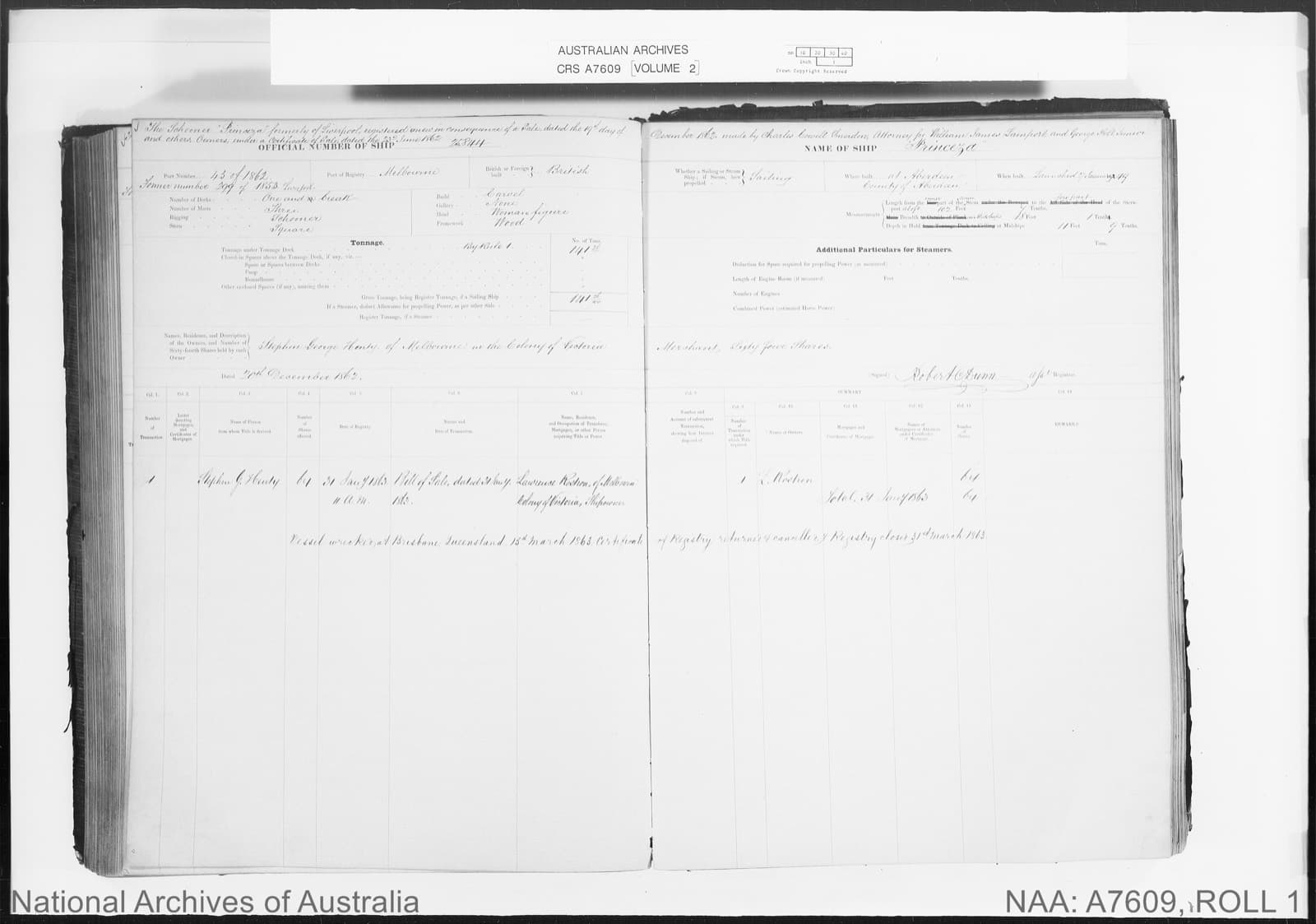
A small Aberdeen-built sailing ship, launched as a brig in 1849 and carrying three masts by the time she reached Australia, the Princeza was two weeks out from Tasmania with hay, oats, wheat, potatoes and timber for Brisbane when she rounded Point Lookout on Sunday 15 March 1863, signalled for a pilot who was not there, and ran onto the South Passage bar off Amity Point. Her crew threw the cargo overboard and cut away her masts to lighten her. It did not work. Nobody died. Three days later the wreck sold at auction in Brisbane for £160, and the little yacht that carried her buyers down to salvage her was lost in the same gale that rolled the hull over and drove it onto Moreton Island.

Protector HMCS (1943)

Capricorn Group

Protector HMCS (1943)

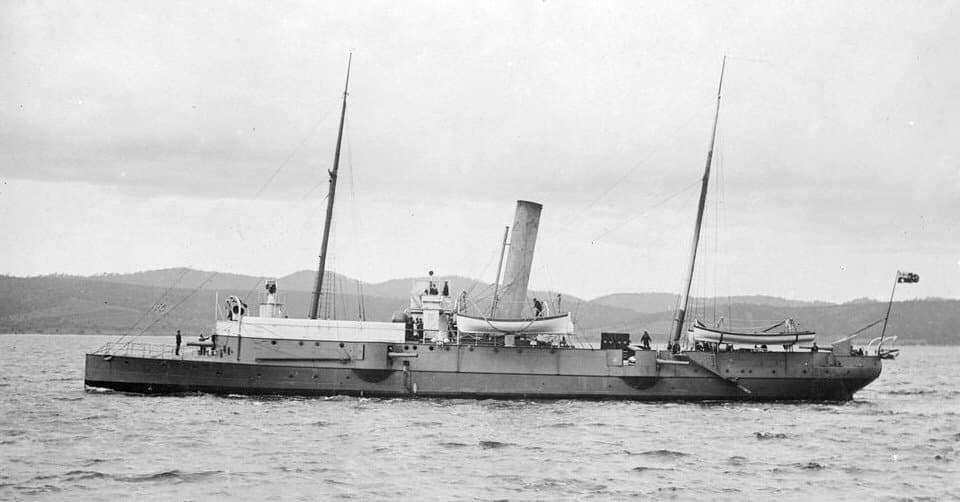
South Australia's warship of 1884 was the largest gunboat any Australian colony bought, and the only ocean-going warship South Australia ever had. She went to China in 1900 and captured a German steamer at Rabaul in 1914. Stripped of her guns and engines, she ended up as a cargo barge in Melbourne, renamed Sidney. In September 1943, while being towed to New Guinea for the US Army, she was rammed by a tug at Gladstone, which tore a hole in her hull. Heron Island's resort owner bought the wreck for £10 and sank her on purpose beside the island's new boat channel, as a breakwater to shelter it from the waves. She is still there, the last ship of her kind, slowly rusting to pieces. Nobody died.

Sovereign (1847)

Moreton Island

Sovereign (1847)

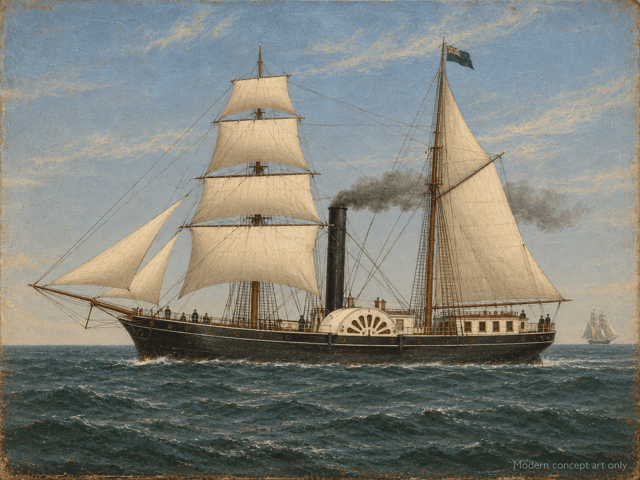
The paddle steamer Sovereign broke up on the South Passage bar in March 1847 with fifty-four people aboard. Forty-four drowned, in what remains the worst shipwreck of colonial Queensland, and the ten who lived were pulled from the surf by Quandamooka men who swam out to them. The loss closed the South Passage to shipping.

St Paul (1914)

Moreton Island

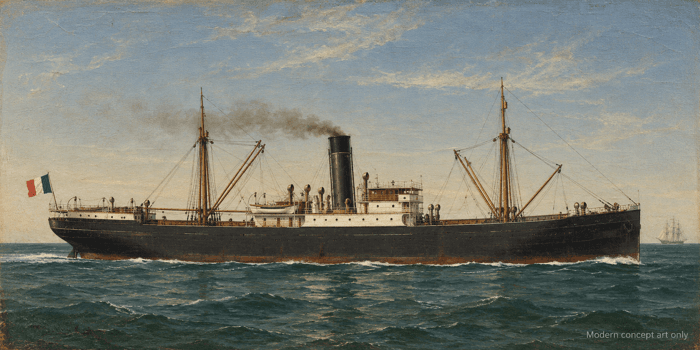
St Paul (1914)

A French steamer out of New Caledonia carrying 2,371 tons of chrome ore struck an uncharted pinnacle east of Smith Rock within minutes of midnight on 26 March 1914, while steering towards the pilot boat. She went down bow-first in about five minutes and no boat was ever got into the water. Eighteen of the twenty-nine aboard died, the master among them. This is the only surveyed position published for any wreck on this rock. It was derived by GPS and lies about 1.2 km east of the gazetted position of Smith Rock, which fits the 1914 evidence that she struck a pinnacle east of the rock itself.

Young Australia (1872)

Moreton Island

Young Australia (1872)

An American extreme clipper, built at Portsmouth, New Hampshire in 1852 as the Red Rover and renamed when the Black Ball Line bought her in 1861, she carried thousands of immigrants to Moreton Bay on some of the fastest runs ever made from England. On 31 May 1872, homeward bound for London with 812 bales of wool, the breeze died on her four and a half hours out of the anchorage. A heavy easterly swell laid her broadside on the rocks at North Point in fine weather and broad daylight. All thirty-one passengers and the crew were landed on the beach, most of the cargo was salvaged, and a small cannon off her deck is still in Brisbane. What survives lies in three to six metres of water in the surf zone and is progressively covered by sand.